No products in the cart.
What Determines the Price of Physical Bullion?

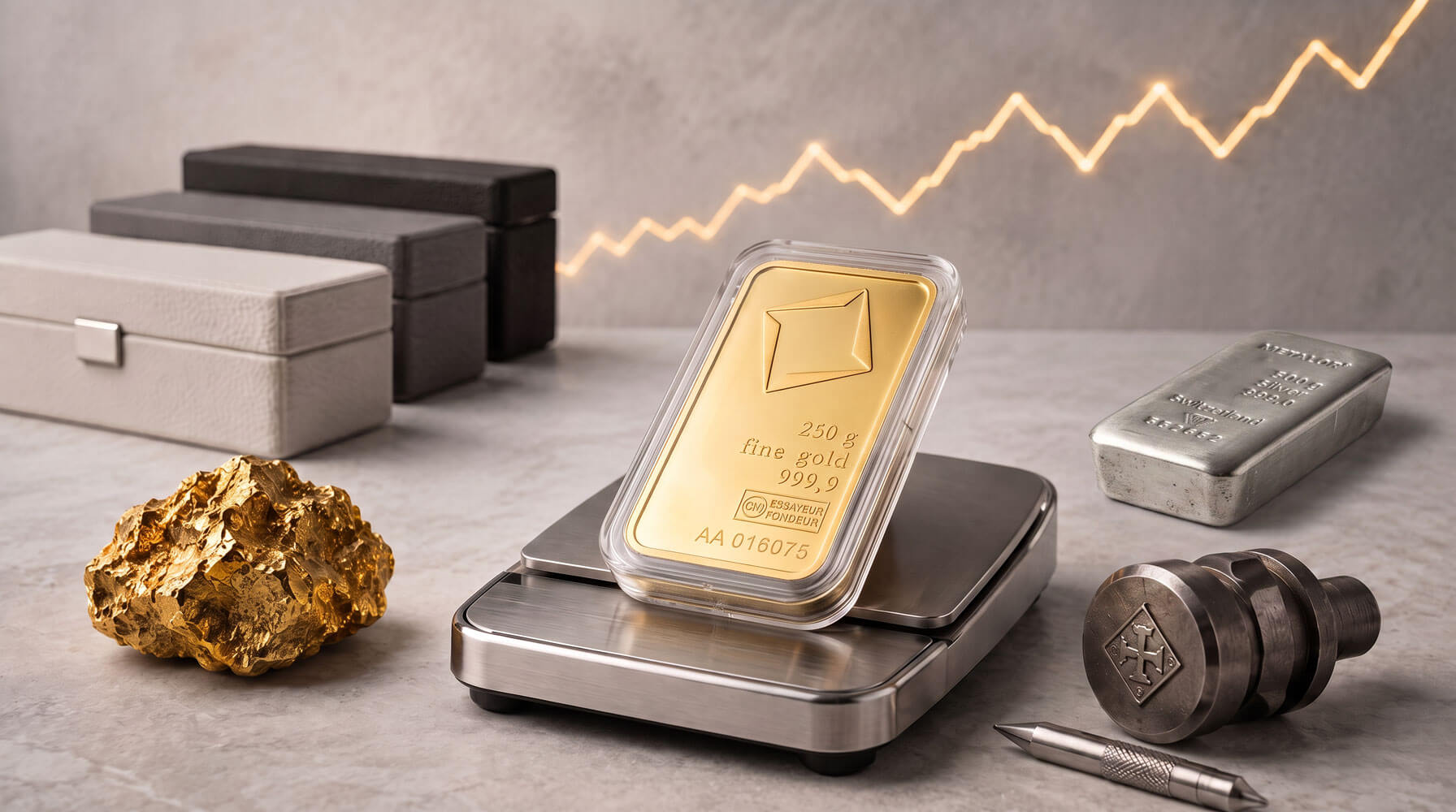
A physical gold bar can have one price in the morning and a different price later.
The product has not changed.
Its weight is still the same.
Its refinery is still the same.
Its purity is still the same.
So why can the price move?
The answer begins with the fact that physical bullion sits inside a global precious metals market.
Gold and silver are traded internationally. Their underlying market prices move as buyers and sellers respond to changing economic conditions, currencies, interest-rate expectations, investment demand, geopolitical developments, and other market factors.
But the underlying metal price is only one part of the amount a buyer sees for a finished physical product.
Understanding the different layers behind bullion pricing can help buyers interpret price movements more clearly.
Start With the Underlying Metal
Every bullion product contains a defined amount of precious metal.
A 20 gram gold bar represents a specific amount of fine gold.
A one-ounce gold bar represents approximately one troy ounce of gold.
A 500 gram silver bar represents a much larger physical quantity of silver.
The international market establishes reference prices for these metals.
This reference is commonly discussed as the spot price.
Spot pricing changes throughout active trading periods because gold and silver are globally traded assets.
That means the starting point for a physical bullion price is not fixed indefinitely.
Physical Bullion Is More Than Raw Metal
A finished bullion bar has gone through several stages before reaching the buyer.
Depending on the product, those stages can include:
- Refining
- Fabrication
- Minting
- Quality control
- Assaying
- Packaging
- Transportation
- Insurance
- Wholesale distribution
- Retail inventory
These costs do not disappear simply because the underlying gold or silver price is publicly visible.
A physical bullion product is a manufactured, deliverable asset.
The difference between the underlying metal value and the retail product price is associated with the premium.
Premiums Differ Between Products
Two gold products containing similar amounts of metal may not have identical retail prices.
Their premiums can differ.
Factors can include:
- Product size
- Manufacturing process
- Refinery
- Packaging
- Availability
- Market demand
- Distribution costs
Smaller products may sometimes carry higher costs relative to the amount of gold they contain because every individual piece still needs to be manufactured, packaged, and handled.
A larger bar concentrates more metal into one physical unit.
This can create different premium structures.
Weight Changes the Price Immediately
The most obvious pricing difference comes from weight.
A 5 gram gold bar and a 50 gram gold bar cannot have the same metal value because the second contains ten times as much gold.
This is why product comparisons should always begin with weight.
Buyers should avoid comparing the total prices of two products without considering how much fine metal each contains.
A cheaper product is not necessarily a better-priced product.
It may simply contain less metal.
Gold and Silver Behave Differently
Gold and silver have different market prices.
They also have different physical characteristics and typical bullion formats.
Gold concentrates significant market value into relatively compact products.
Silver requires more physical weight to represent the same monetary amount.
This is why silver bars frequently appear in larger formats such as 250 grams, 500 grams, or one kilogram.
The pricing of those products reflects the silver market rather than the gold market.
A buyer comparing metals should therefore avoid interpreting physical size as a direct indication of value.
A large silver bar may still cost much less than a small gold bar.
The Troy Ounce Matters
Precious metals commonly use the troy-ounce system.
One troy ounce equals approximately 31.1035 grams.
This differs from the more familiar avoirdupois ounce used for many everyday goods.
Understanding this distinction is useful because international gold and silver prices are often quoted per troy ounce.
A one-ounce bullion bar therefore represents a specific precious-metals measurement, not the standard household ounce.
Currency Can Influence the Local Price
Gold and silver are commonly referenced internationally in US dollars.
For buyers operating in other currencies, exchange-rate movements can create another pricing layer.
Even if the international gold price remained unchanged, a significant currency movement could affect how that metal is priced locally when converted.
For RM Bullion buyers viewing products in US dollars, this layer is more direct.
But currency still forms part of the wider international market that influences precious-metal trading.
Product Availability Matters
Physical bullion is not unlimited at the retail level.
A refinery can produce gold and silver, but finished bars still need to move through a supply chain.
During periods of unusually strong demand, specific products may become harder to obtain.
A particular weight or refinery may sell faster than another.
This can affect premiums and availability.
The underlying metal market might remain active even while a certain retail product is temporarily difficult to source.
This highlights an important distinction:
Gold may be available as a global commodity while a specific physical gold bar is not immediately available from every dealer.
Demand for Certain Formats Can Change
Buyers do not always want the same products.
At one time, smaller gram bars may be in stronger demand.
At another, buyers may focus more heavily on one-ounce products.
Silver demand may increase when buyers want lower-cost physical exposure to precious metals.
Recognizable coins can also experience changes in demand.
These preferences can influence the physical market.
They do not replace the underlying metal value, but they can affect the premium surrounding a particular product.
Refinery and Mint Matter
A bullion bar is not only defined by metal and weight.
Its producer matters too.
Recognized refineries create standardized investment products with clearly identifiable specifications.
RM Bullion’s range includes products from Swiss refiners such as Valcambi and Metalor.
Buyers looking at two products of a similar weight may still see differences associated with manufacturer, format, or current availability.
The comparison should consider the full product.
Coins Can Have Different Pricing Dynamics
A bullion coin can contain precious metal while also carrying additional characteristics.
These might include:
- Mint origin
- Design
- Historical recognition
- Year
- Market demand
- Limited availability
This means the price relationship between coins and bars is not always identical.
Someone comparing a gold sovereign and a gold bar should first understand that they are different physical formats.
The right choice depends on what the buyer values.
A Live Price Is a Moment in Time
When a website displays a bullion price, that amount reflects market conditions at that point.
If the underlying metal moves, the displayed product price can also change.
This is normal in a live precious-metals environment.
It does not mean the seller arbitrarily changed the product.
It means the value of the underlying commodity has moved.
This distinction is particularly important during volatile markets, when gold or silver prices can change noticeably within a short period.
Why Yesterday’s Price May No Longer Apply
A buyer may see a gold bar at one price, return later, and find another.
Several factors may have changed:
- Gold spot price
- Silver spot price
- Product premium
- Availability
- Market demand
- Currency conditions
- Dealer inventory
Even a modest movement in the international gold price can become noticeable on a larger bar because more fine metal is involved.
The larger the product, the more absolute dollar value a small percentage move can represent.
The Buy Price and Sell Price Are Different
Another common source of confusion is assuming that the retail price of bullion represents its immediate resale value.
Physical bullion markets normally have two sides.
There is a price at which a product is sold to the buyer.
There is also a price at which a dealer may buy bullion from an owner.
The difference between those prices is commonly associated with the spread.
The spread can reflect:
- Market conditions
- Product demand
- Dealer inventory
- Transaction costs
- Liquidity
- Product format
This is why physical bullion should generally be considered with an appropriate time horizon rather than viewed as a product that can always be purchased and immediately resold at exactly the same number.
Compare Like With Like
When evaluating prices, comparisons need to be fair.
Compare:
- Gold bar with gold bar
- Similar weight with similar weight
- Comparable purity
- Comparable refinery recognition
- Similar product format
Comparing the price of a 5 gram gold bar against a one-ounce bar without adjusting for weight provides little useful information.
The same applies to silver.
A 250 gram bar and a one-kilogram bar serve different allocation sizes.
Focus on Total Cost, Not One Number
A smart comparison considers more than the spot price.
Look at:
- Metal
- Weight
- Purity
- Refinery or mint
- Product format
- Current price
- Premium
- Availability
- Future flexibility
This gives the buyer a more complete understanding.
The goal is not to find a magical product that ignores the realities of physical bullion pricing.
The goal is to understand what is being purchased and what makes up the price.
Price Transparency Supports Better Decisions
Bullion becomes easier to evaluate when buyers understand why its price changes.
The underlying precious metal is globally traded.
The finished product has manufacturing and distribution costs.
Different weights create different transaction sizes.
Availability can influence premiums.
Coins and bars have different characteristics.
Buy and sell prices operate on different sides of the transaction.
Together, these factors create the price of physical bullion.
Once those layers are understood, price movement becomes less mysterious.
A changing price does not change what the product is.
It reflects the market around it.
Frequently Asked Questions
Why can the price of a gold bar change during the day?
Gold is traded globally, so changes in the underlying market price can affect the retail price of physical gold products.
Is the spot price the same as the price of a gold bar?
Not usually. A physical bullion product can include a premium above its underlying metal value.
Why can smaller bars cost more per gram?
Manufacturing, packaging, handling, and distribution costs are spread across a smaller amount of gold, which can influence the relative premium.
Why are gold and silver bars priced differently?
Gold and silver have different underlying market values, so the amount and type of precious metal inside each product affect its price.
Does the retail price equal the amount I would receive if I sold immediately?
Not necessarily. Retail selling prices and dealer buying prices are different sides of the bullion market.
Understand the Numbers Before You Buy
Compare gold bars, gold coins, and silver bars across different weights, formats, and recognized Swiss refineries.
Related Articles
Gold Bar Dimensions Beyond the Weight
A gold bar is usually described first by its weight. Five grams. Twenty grams. One ounce....
Read More
Confident Precious Metal Buying Starts with Clarity
Buying precious metals should feel clear, not confusing. Whether someone is interested in gold bars, gold...
Read More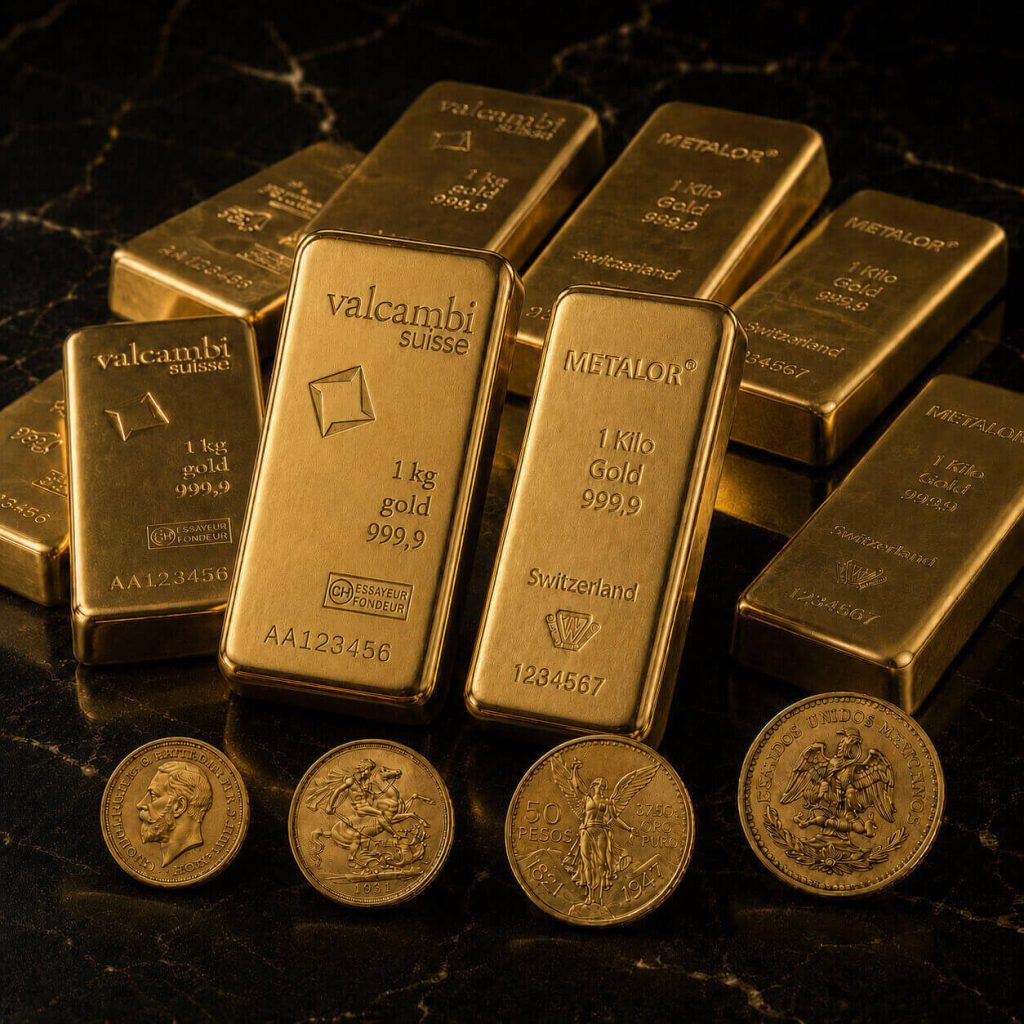
Gold Bars and Gold Coins Serve Different Buying Goals
Gold bars and gold coins are two of the most recognized ways to own physical gold....
Read More