No products in the cart.
Gold Bar Dimensions Beyond the Weight

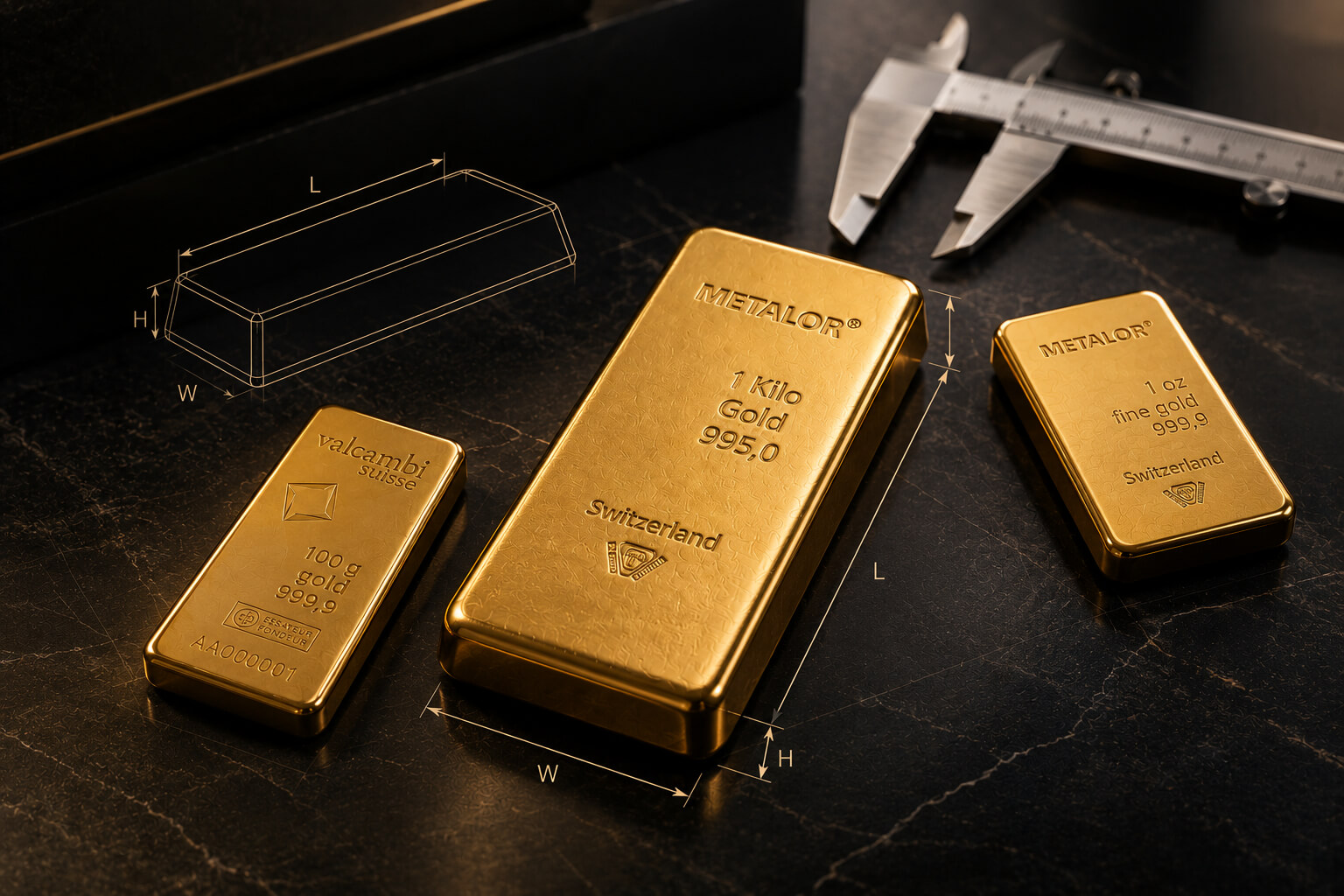
A gold bar is usually described first by its weight.
Five grams.
Twenty grams.
One ounce.
Fifty grams.
One hundred grams.
Weight is essential because it tells the buyer how much physical gold the product contains.
But weight does not tell the entire physical story.
Two gold bars containing similar amounts of fine gold can look different.
One may be wider.
Another may be longer.
One may be relatively thin.
Another may be more compact and thicker.
These differences can sometimes surprise buyers who expect every bar of a particular weight to have exactly the same dimensions.
The explanation is straightforward.
Bullion refineries manufacture products using their own established formats, designs and production methods.
The shape can change without changing the amount of fine gold represented by the stated weight and purity.
Weight and Dimensions Describe Different Things
A bullion product has several physical specifications.
The most important can include:
- Metal
- Weight
- Purity
- Length
- Width
- Thickness
- Refinery
- Product format
Weight describes how much material the product contains.
Dimensions describe how that material has been shaped.
These are related, but they are not interchangeable.
A longer, thinner gold bar can have the same weight as a shorter, thicker gold bar if the total amount of gold remains equivalent.
Gold Is a Dense Metal
One reason gold bars can remain compact even at meaningful values is the physical density of gold.
A relatively small object can contain a substantial amount of precious metal.
This is part of what distinguishes gold from many everyday materials.
It also explains why buyers should not attempt to estimate gold content from visual size alone.
A product can appear small and still contain a meaningful weight of fine gold.
The stated specifications matter more than appearance.
Refinery Design Influences Shape
Recognized refineries develop their own product designs.
A minted Valcambi bar does not need to have the exact same dimensions as a Metalor bar of comparable weight.
Differences can come from:
- Production tooling
- Packaging format
- Surface design
- Edge design
- Branding layout
- Preferred proportions
This does not mean one product contains less gold simply because it looks smaller from one angle.
The buyer should compare the actual weight and fineness.
Minted and Cast Bars Can Look Different
Manufacturing method can also influence dimensions.
Minted bars
Minted bullion products are generally produced with a highly controlled shape and finished appearance.
They often have:
- Precise edges
- Consistent dimensions
- Detailed refinery markings
- Smooth surfaces
- Protective packaging
Cast bars
Larger cast products can have a more traditional bullion appearance.
Their edges and surfaces may look less uniform than those of smaller minted bars.
The visual difference comes from manufacturing style.
It does not automatically indicate a difference in purity or legitimacy.
The product specifications remain the key reference.
Why a 1 oz Bar Is Not Always the Same Shape
One ounce is a unit of weight.
It is not a required shape.
Two refiners can produce a one-ounce gold bar with slightly different:
- Length
- Width
- Thickness
- Corner shape
- Surface finish
Both can still contain one troy ounce of fine gold when produced to the stated specification.
This is useful for buyers to understand when comparing products online.
Photographs can create the impression that one bar is larger than another.
Without a shared scale in the image, visual comparison can be misleading.
Product Pages Matter
The most reliable way to understand a bullion bar’s physical format is to review the product specifications.
For example, the 20 Gram Valcambi Swiss Gold Bar includes information about both its weight and physical size.
This allows buyers to understand the product more accurately before purchasing.
A product page can answer questions that photography alone cannot.
When comparing bullion, review:
- Weight
- Fineness
- Dimensions
- Refinery
- Product type
- Packaging
Together, these details provide a much clearer picture.
Dimensions Influence Storage
Physical size matters practically once the bullion is owned.
A buyer storing several small bars may use a different organizational method from someone holding one large bar.
Bars with uniform dimensions may fit neatly together.
Mixed products can require more flexible storage.
Original packaging also adds size.
A small gold bar enclosed in a protective assay card occupies more space than the bare gold itself.
This does not create a major issue with a few products.
As holdings grow, dimensions become more relevant.
Thickness Can Be Easy to Overlook
Most product photography shows bullion from the front.
This makes length and width easy to see.
Thickness is less obvious.
Two bars may have similar front-facing dimensions while differing noticeably when viewed from the side.
This matters when:
- Organizing several pieces
- Comparing physical formats
- Choosing storage compartments
- Understanding how substantial the product feels
A bar should be evaluated as a three-dimensional object rather than a flat image.
Larger Weight Does Not Always Mean Proportionally Larger Width
If a 20 gram bar becomes a 50 gram bar, every dimension does not necessarily increase by exactly the same percentage.
The refinery can distribute the additional material through:
- More length
- More width
- More thickness
- A combination of all three
This is another reason visual estimation can be unreliable.
The actual specifications provide better information.
Packaging Can Change the Apparent Size
Minted gold bars are often photographed inside protective packaging.
The packaging may include:
- Assay information
- Refinery branding
- Protective plastic
- Card material
- Product identification
This can make a small bar appear significantly larger in photographs.
The physical gold occupies only part of the total packaged area.
Buyers comparing bare bars and packaged bars should keep this difference in mind.
Dimensions Can Help With Identification
Physical dimensions can also form part of product verification.
A genuine bullion product should correspond broadly with established manufacturer specifications.
Weight, size and design work together.
A product that is dramatically different from its expected physical specifications deserves closer inspection.
Dimensions alone do not authenticate bullion.
They are one useful reference among several.
A proper evaluation may consider:
- Weight
- Dimensions
- Refinery markings
- Surface details
- Packaging
- Purity
- Professional testing where necessary
Never Verify Gold by Appearance Alone
Gold-colored objects are easy to create.
A visually convincing bar is not automatically genuine bullion.
This is why trusted sourcing matters.
Buyers should rely on recognized dealers and established products rather than attempting to judge authenticity only from photographs.
Physical dimensions can support understanding.
They are not a substitute for proper provenance and verification.
Small Differences Do Not Automatically Signal a Problem
Buyers may sometimes compare two products and notice that they are not identical in shape.
That can be perfectly normal.
Possible reasons include:
- Different refineries
- Different manufacturing series
- Different packaging
- Minted versus cast production
- Design changes
- Different product weights
The correct comparison is against the specifications for that particular product, not against an unrelated bar.
Dimensions Influence Handling
A compact bar can be easy to hold, but unnecessary handling should still be limited.
Very small bars can also be easier to misplace.
Larger bars can be heavier than they appear.
The physical format should therefore influence how the product is handled.
Good practice includes:
- Keeping smaller pieces organized
- Maintaining protective packaging
- Avoiding loose contact between products
- Supporting heavier bars properly
- Returning bullion to secure storage after inspection
Physical ownership becomes easier when the format is respected.
Gold Coins Follow Different Design Rules
Coins provide another example of why weight does not determine one exact shape.
A gold coin is circular.
A gold bar is usually rectangular.
Both can contain a defined amount of gold.
The physical geometry is different because the product format is different.
Coins also have diameter and thickness specifications rather than the length-and-width structure of a rectangular bar.
This reinforces an important principle:
Precious-metal weight tells you the amount of metal.
Product design tells you how that metal is physically presented.
Storage Planning Should Use the Real Product Size
A buyer planning secure storage should avoid thinking only in terms of total gold weight.
Twenty small packaged bars may occupy more practical space than one larger bar containing a similar total amount of gold.
Silver increases this difference further because larger weights are common.
Storage should therefore consider:
- Number of products
- Individual dimensions
- Packaging
- Total weight
- Accessibility
- Separation between pieces
This creates a more realistic plan.
Photography Can Distort Perception
Online product photography is designed to show detail.
Images may be:
- Cropped closely
- Enlarged
- Photographed at different angles
- Displayed without scale
A five-gram bar can therefore look visually similar in size to a fifty-gram bar when viewed in separate images.
The written specifications correct this problem.
When comparing products, the numbers should guide the interpretation of the photograph.
Physical Format Is Part of the Ownership Experience
Choosing bullion involves more than selecting a number on a screen.
The buyer receives a real object.
Its dimensions affect:
- How it feels
- How it is stored
- How it is organized
- How it is packaged
- How easily different products can be separated
Understanding physical format helps buyers know what to expect before the product reaches their hands.
Weight Remains the Main Reference
Dimensions are useful, but they should not distract from the central bullion characteristics.
The main questions remain:
- What metal is it?
- What is the weight?
- What is the fineness?
- Who refined it?
- Is it authentic?
- Does the product fit the buyer’s purpose?
Dimensions add context.
They explain why two legitimate products can look different despite representing similar amounts of gold.
Look Beyond the Front of the Bar
A bullion bar is not just a photograph.
It has weight, depth, edges, surfaces, proportions and a specific manufacturing format.
Understanding those characteristics makes physical ownership easier to visualize.
A buyer who knows how to read weight, purity and dimensions together can compare products more accurately and avoid assumptions based on appearance alone.
Gold bars do not need identical shapes to represent the same amount of fine metal.
What matters is that the product’s physical specifications, refinery identity and stated precious-metal content align clearly.
Frequently Asked Questions
Can two gold bars of the same weight have different dimensions?
Yes. Different refineries and manufacturing formats can use different lengths, widths and thicknesses while maintaining the same stated gold weight.
Does a physically larger gold bar always contain more gold?
No. Visual size alone is not enough. Weight and purity provide much more useful information about the amount of fine gold.
Why do packaged gold bars look larger?
Protective assay-card packaging extends beyond the physical gold bar, making the complete packaged product appear larger.
Are minted and cast bars shaped differently?
They can be. Minted bars often have more precise edges and uniform dimensions, while cast bars can have a more traditional physical finish.
Can dimensions confirm that a gold bar is authentic?
Dimensions can support identification, but they should not be used alone. Weight, markings, provenance and professional verification can also be important.
Understand the Product Beyond the Weight
Explore Swiss gold bars across different weights, formats, and physical specifications.
Related Articles

A Practical Guide to Bullion Liquidity
When people describe physical bullion, they often focus on weight, purity, refinery and price. Another term...
Read More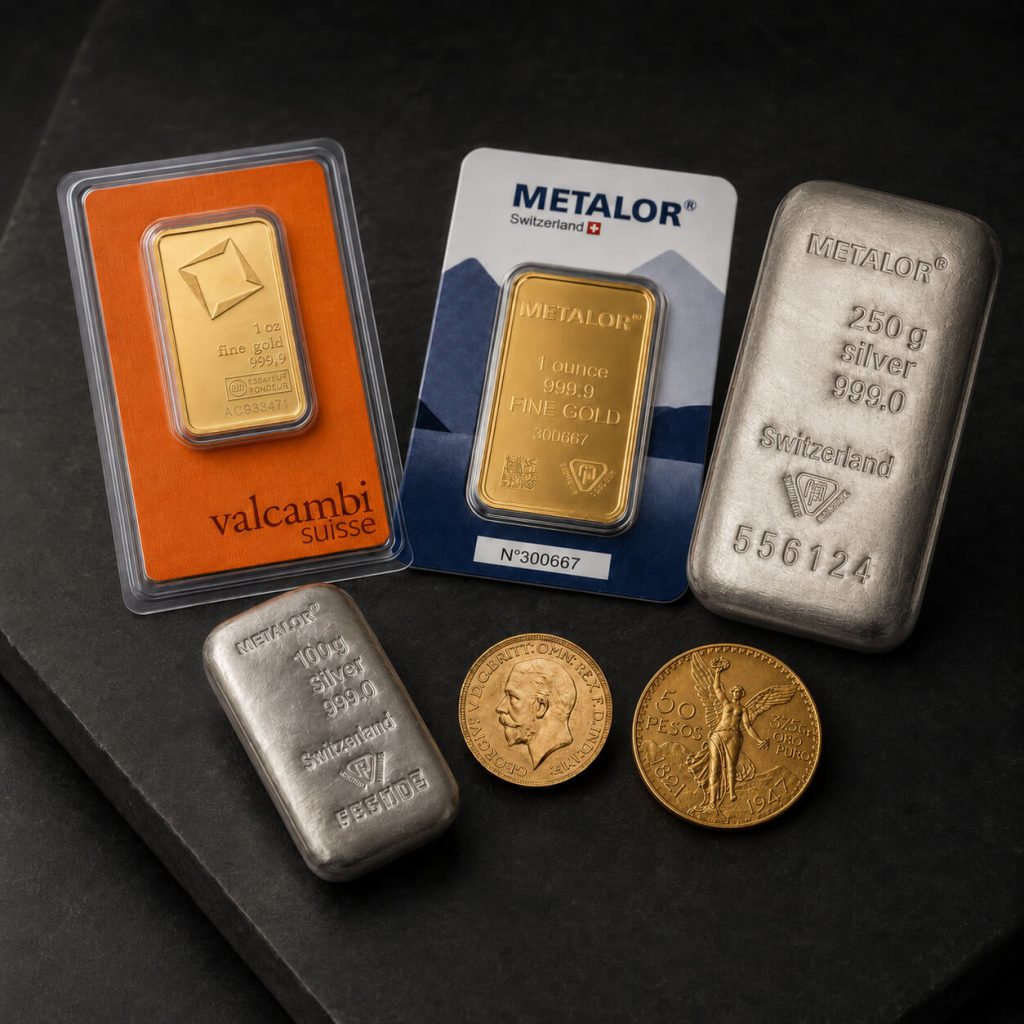
Confident Precious Metal Buying Starts with Clarity
Buying precious metals should feel clear, not confusing. Whether someone is interested in gold bars, gold...
Read More
Understanding Bullion Premiums Before You Buy
When buyers look at the price of a gold bar or silver bar, one of the...
Read More