
No products in the cart.
Choosing Bullion Weights for Your Buying Plan

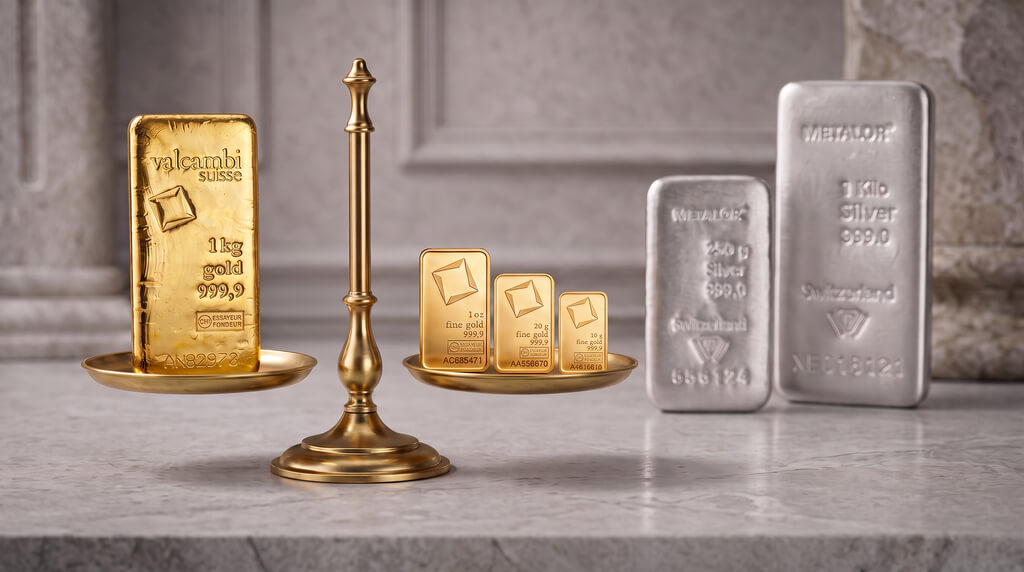
Once a buyer decides to own physical bullion, another decision quickly follows: what weight should they buy?
Gold and silver are available in a range of physical formats. A buyer may encounter small gram-denominated gold bars, one-ounce products, larger bars and silver bars that can reach hundreds of grams or kilograms.
The amount of precious metal is obviously important, but weight also affects how a physical holding can be managed.
A larger bar concentrates more metal into one piece. Several smaller bars divide the same general allocation across multiple units.
Neither structure is automatically superior.
The most appropriate weight depends on budget, storage, desired flexibility, purchase frequency and the reason the buyer wants physical bullion in the first place.
RM Bullion’s current range illustrates this variety, with products spanning smaller Valcambi gold bars, one-ounce Valcambi and Metalor gold bars, larger gold formats, gold coins and silver bars.
Start With the Purpose, Not the Weight
Before comparing grams and ounces, define what the bullion is supposed to accomplish.
Someone purchasing physical gold as a long-term store of value may have different priorities from someone who wants to accumulate gradually.
Another buyer may want several physical pieces rather than concentrating the full amount in one bar.
Possible objectives include:
- Long-term precious metal ownership
- Gradual accumulation
- Portfolio diversification
- Gifting
- Wealth transfer
- Holding both gold and silver
- Maintaining flexibility across individual pieces
Once the purpose is clear, weight selection becomes easier.
Smaller Gold Bars Can Support Gradual Buying
Smaller gold bars can provide a straightforward entry into physical gold.
Instead of waiting until the budget supports a large bar, a buyer can acquire smaller units over time.
RM Bullion currently offers smaller Valcambi products, including its 20 Gram Valcambi Swiss Gold Bar. The listed specifications state 999.9 fineness and a net weight of 20 grams.
Smaller units can make sense for buyers who want to build holdings incrementally.
They can also provide physical flexibility.
If an owner eventually wants to sell only part of their gold, multiple individual pieces can make that easier than owning the same general amount in a single indivisible bar.
Flexibility Has a Cost Consideration
Smaller bars may have a different premium structure than larger bars.
That means buyers should not choose small units simply because they feel more accessible.
They should compare the total transaction.
If flexibility is important, the additional cost associated with multiple smaller products may be acceptable.
If the primary objective is concentrating a large amount of metal efficiently, larger formats may deserve more attention.
Mid-Sized Bars Can Create a Balance
For many buyers, mid-sized gold bars can sit between the flexibility of small products and the concentration of very large bars.
A 50g bar is one example.
RM Bullion lists a 50 Gram Valcambi Swiss Gold Bar produced at 999.9 fineness.
A product at this size can represent a meaningful amount of gold without reaching the scale of a 500g bar.
For someone building a physical gold position over time, mid-sized bars can potentially form a core holding while smaller pieces provide additional flexibility.
This is not a universal formula.
It is simply one way of thinking about the role of different weights.
One Ounce Is an Internationally Familiar Format
The troy ounce is widely used in precious metals markets.
One troy ounce equals approximately 31.1035 grams.
For buyers accustomed to following international gold prices quoted per ounce, a one-ounce bar can be intuitive.
RM Bullion currently lists both a 1 oz Valcambi Swiss Gold Bar and a 1 oz Metalor Swiss Gold Bar among its best-selling products.
The presence of the same weight from different recognized Swiss refiners also gives buyers an opportunity to compare products within a similar size category.
When comparing one-ounce products, consider:
- Refinery
- Purity
- Packaging
- Availability
- Current price
- Premium
- Personal preference
The metal weight may be similar, but the complete physical product should still be reviewed.
Larger Gold Bars Concentrate Value
As bar size increases, a greater amount of gold is concentrated into each physical piece.
RM Bullion lists a 500 Gram Valcambi Swiss Gold Bar with 999.9 fineness.
A buyer considering a product of this size should think beyond the purchase itself.
Larger bars introduce practical questions.
Where will the bar be stored?
How much of the total gold holding would be concentrated in that one piece?
Would the owner ever want to sell only a small part of the position?
Does the larger format match the intended holding period?
These questions become increasingly relevant as the weight per individual product rises.
Think in Units, Not Only Total Weight
Imagine two holdings that contain the same total amount of gold.
Holding A consists of one large bar.
Holding B consists of several smaller bars.
The total gold weight may be equivalent, but the ownership experience is different.
Holding A has fewer pieces to organize and store.
Holding B offers more individual units.
This distinction can matter later.
If the owner of Holding B wants to transfer, gift or sell part of the gold, one individual bar can potentially be separated from the rest.
The owner of Holding A has a single physical unit.
This is why bullion weight should be considered alongside divisibility.
Do Not Confuse Physical Divisibility With Metal Value
A larger gold bar still represents a precise amount of gold.
The issue is not whether its value can be calculated.
The issue is whether the physical product itself can be divided conveniently while preserving its recognized bullion format.
Cutting a professionally refined bar into pieces would fundamentally change the product.
Buyers should therefore choose denominations before purchasing rather than assume they can physically divide the bar later.
Silver Requires a Different Weight Perspective
Gold and silver should not be compared purely by physical size.
Silver has a much lower value per unit of weight than gold, so buyers typically encounter larger and heavier physical formats for comparable monetary allocations.
A 250g silver bar can therefore be a relatively accessible bullion product even though 250 grams would represent a very substantial gold holding.
RM Bullion currently lists a 250 Gram Metalor Swiss Silver Bar with 999 fineness.
It also offers 1kg silver bars from Valcambi and Metalor.
This creates different storage considerations.
Storage Space Becomes More Relevant With Silver
A substantial silver holding occupies more physical volume and weight than the equivalent monetary value in gold.
A buyer who wants to accumulate silver over many years should therefore think ahead.
A few silver bars may be easy to accommodate.
A much larger collection requires more deliberate storage planning.
Questions can include:
- How much physical space is available?
- Can the storage solution safely support the weight?
- How will individual products be organized?
- How often will the bullion need to be accessed?
- Will gold and silver be stored separately?
Choosing silver weights without thinking about future accumulation can create unnecessary complications.
Consider How Often You Expect to Buy
Purchase frequency can also influence denomination.
Someone making occasional larger allocations may prefer a different weight structure from someone buying smaller amounts regularly.
A regular buyer could accumulate several small or medium gold bars over time.
Another buyer may save the intended bullion allocation and make fewer, larger purchases.
Neither method guarantees a better financial outcome.
The relevant question is which approach is sustainable and consistent with the buyer’s financial circumstances.
A Mixed-Weight Approach Can Provide Flexibility
Buyers do not necessarily need to choose one denomination forever.
A physical holding can include different weights.
For example, someone could maintain a core position in larger bars while holding several smaller bars for flexibility.
Another buyer may combine one-ounce gold bars with gram-denominated products.
A silver holding might include both 250g and 1kg bars.
The purpose of mixing weights should be practical rather than random.
Each denomination should have a role.
Premiums Need to Be Included in Weight Decisions
Weight and premium are connected.
Manufacturing and handling costs are distributed differently across products of different sizes.
Smaller products can therefore carry a different premium relative to their metal content than larger products.
A buyer deciding between ten small bars and one larger bar should compare the complete cost of both structures.
This does not mean the larger option automatically wins.
The smaller products may provide flexibility that the buyer intentionally values.
The key is recognizing the trade-off before purchasing.
Consider Future Resale in Advance
Bullion should not be purchased with only the first transaction in mind.
Eventually, the owner or their family may decide to sell.
Different weights can create different practical options at that point.
Several smaller bars allow transactions to occur piece by piece.
A large bar concentrates the decision.
Recognized refinery products and commonly understood weights can also make product identification more straightforward.
Thinking about resale before buying can therefore influence denomination selection.
Weight Can Matter for Gifting and Transfer
Physical bullion is sometimes purchased with future gifting or family transfer in mind.
Several smaller products may be easier to distribute among multiple recipients than one large bar.
If this is part of the objective, it should be considered before building the holding.
A buyer might intentionally select a combination of weights that provides options later.
Again, this is not about predicting exactly what will happen years from now.
It is about preserving practical choices.
Avoid Building a Random Collection
One common mistake is buying whichever product looks appealing without considering how it fits existing holdings.
Over time, this can create a collection of unrelated weights and formats.
Variety is not necessarily bad.
Unplanned variety can simply make the collection harder to manage.
A basic inventory helps.
Record:
- Product
- Metal
- Weight
- Refinery
- Quantity
- Purchase date
Reviewing that information before the next purchase can reveal whether another weight would improve the structure of the holding.
Your Budget Should Set the Boundary
The most important factor is not the availability of a particular weight.
It is what the buyer can comfortably allocate.
A larger bar should never be chosen simply because it appears more efficient if purchasing it places unnecessary pressure on other financial priorities.
Likewise, a buyer should not automatically purchase many small bars simply because each individual transaction feels manageable.
Look at the cumulative allocation.
Physical bullion should fit within a broader financial plan.
The Right Weight Is Personal
There is no universal “best” gold bar weight.
There is no universal “best” silver bar weight either.
A useful denomination is one that aligns with:
- Budget
- Purpose
- Storage
- Purchase frequency
- Desired flexibility
- Premium considerations
- Potential future transactions
A buyer who understands those factors can compare products with much greater clarity.
Bullion weight is not simply a number stamped on a bar.
It determines how the precious metal exists as a physical asset in your possession.
Choosing deliberately can make that ownership easier to manage from the first purchase through long-term holding and eventual resale or transfer.
Frequently Asked Questions
Is a larger gold bar always better value?
Larger bars may have different premium economics, but they also concentrate more gold into one physical unit. The best choice depends on budget, flexibility, storage and the buyer’s objectives.
Why do buyers choose smaller gold bars?
Smaller bars can support gradual accumulation and provide more individual units for future selling, gifting or transfer.
Is one ounce the same as 28 grams?
Not for precious metals. Bullion uses the troy ounce, which is approximately 31.1035 grams.
Should I buy several small bars or one large bar?
Consider the total premium, desired flexibility, storage needs and how you might eventually sell or transfer the bullion.
Why are silver bars usually heavier than gold bars?
Silver has a lower value per unit of weight than gold, so physical silver holdings commonly use larger weights such as 250g, 500g or 1kg.
Find the Bullion Weight That Fits
Compare gold and silver products across different weights, formats, and recognized Swiss refineries.
Related Articles
What 999.9 Purity Means When Buying Gold Bars
When buyers look at gold bars, one of the most important details they will notice is...
Read More
Gold Bars and Gold Coins Serve Different Buying Goals
Gold bars and gold coins are two of the most recognized ways to own physical gold....
Read More
Why Physical Gold Still Matters in a Digital Financial World
In a world where money, investments, and financial decisions are becoming increasingly digital, physical gold continues...
Read More